
Equine planet (CSR)
At La Corona Residencia Equina, we aim to strengthen our current and future Corporate Social Responsibility (CSR) initiatives to create a “place in the world” where everything is coherent, ethical and sensitive, doing our part for a more sustainable and happier world.

In our vision, the economic activity of the estate must be holistic and integrated into its environment and society, ensuring that its impacts are always positive. To achieve this, horses play a central role in how we manage the estate under sustainability standards (forestry and agriculture)
In addition, we contribute to climate change mitigation by enhancing CO₂ sequestration in forests and agricultural and forest soils. We also care for nature and all its components, actively promoting animal and plant biodiversity.
CSR ACTIONS CARRIED OUT ON THE ESTATE
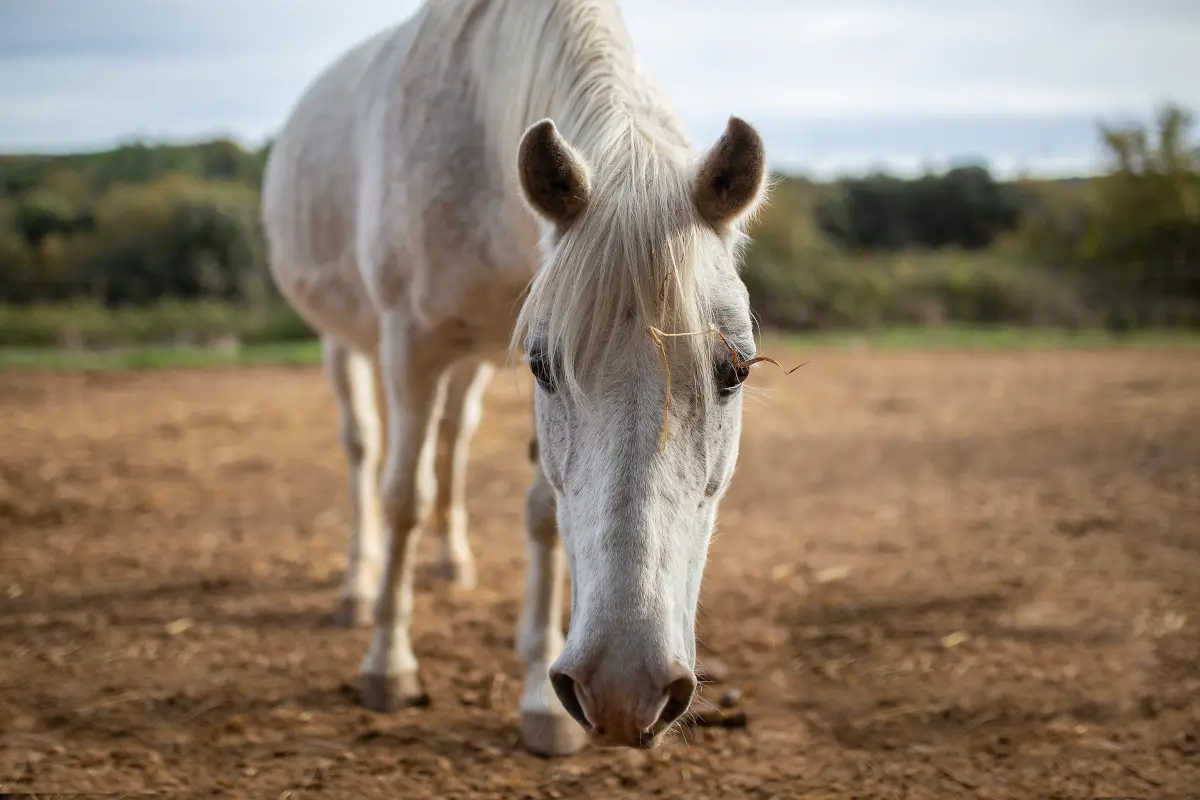
We adopt equines in vulnerable situations
At La Corona, we adopt equines that were previously at risk, with uncertain or even fatal futures. These are abandoned equines or those no longer suitable for equestrian disciplines due to advanced age, irreversible injuries, or having suffered physical or psychological abuse. They are part of our family and are fully integrated into the rest of the herd. We are members / sponsors of:
ADE - Asociación de Defensa de los Équidos
Refugio Equino Platero
Fundació Projecte Miranda
Adoption of equines in vulnerable situations
Studies linked to the equine world and natural ecosystems
Study on the behaviour of domestic horses living in semi-freedom and in herds, simulating their ancestral way of life.
Through this study, we have gathered information about each horse’s background and experiences prior to arriving at La Corona Residencia Equina, as well as their subsequent adaptation to life in freedom.
We have observed that the following factors influence—more or less significantly—the horse’s self-esteem, ability to integrate into a herd, hierarchical position within it, and even overall health:
- the horse’s equestrian discipline
- the intensity of their sporting activity
- time spent with their biological mother
- number of owners
- the affection received
- experiences of handling, mistreatment, or the type of accommodation in which they were housed
There is extensive literature on the behaviour of wild horses living in herds, but very little on the behaviour of domestic horses returning to their original lifestyle—free, in herds, and within a fully natural environment.

Promoting insectivorous birds to reduce flies and horseflies affecting horses
In collaboration with the Institut Català d’Ornitologia (ICO), we have carried out actions to increase insectivorous bird populations on our estate. These populations had been drastically reduced by conventional agricultural practices (including the use of agrochemicals) previously carried out on the lands of La Corona Residencia Equina.
Today, our agricultural activities follow organic and integrated farming models.
As part of the collaboration agreement between ICO and La Corona Residencia Equina, ICO ornithologists conducted a study to determine which insectivorous bird populations should be encouraged.
They installed dozens of nest boxes across the estate to promote breeding and population growth of selected species (hoopoe (Upupa epops) – white wagtail (Motacilla alba) – common house martin (Delich on urbicum) – barn swallow (Hirundo rustica)).
After years of diverse actions, bird populations have increased significantly both in number and species diversity. A particularly relevant finding confirms our success: in surveys conducted outside the boundaries of La Corona estate, both the number of individuals and species diversity decrease substantially compared to the values recorded within La Corona.
We share the information obtained with the scientific community. For this reason, La Corona Residencia Equina has become a biological monitoring platform for the SOCC (Common Bird Monitoring Programme of Catalonia). To facilitate data transfer, ICO has georeferenced the installed nest boxes, birds are ringed, and their
behaviour is monitored.
The synergy with horses lies in reducing fly and horsefly populations. The aim of the study is to highlight the insect-control role of birds as an alternative to chemical products not permitted in organic and integrated agriculture. While bird populations have increased significantly, the impact on fly and horsefly populations is still being assessed. ICO continues its research at La Corona Residencia Equina.
Actions to protect nature and combat climate change
Restoring and enhancing Mediterranean ecosystems
We have modified the Forest Management Plan of the La Corona estate, prioritising protective objectives and wildfire prevention over the previously established production-focused goals. In other words, we place the protection and improvement of nature at the forefront of our sustainable forest management actions.

These actions are further supported by the grazing activity of horses and ponies, which reduces undergrowth and therefore lowers the risk of fire spread in the event of a wildfire.
We hold international PEFC certification, which endorses our Sustainable Forest Management
In this space we will be updating the horse-assisted activities that we will be holding at La Corona Equestrian Residence soon.
Increasing the CO₂ sink capacity of La Corona’s forests
The forest management model we apply is not only sustainable but also increases the atmospheric carbon sequestration capacity of the estate’s forests by at least 1,000 kg of CO₂ equivalent per hectare per year (we manage approximately 140 hectares of forest and 30 hectares of agricultural land).
To reinforce our commitment, we collaborate in the European LifeForestCO₂ project, generating data to enhance the carbon sink effect of forests through sustainable forest management practices.
From La Corona Residencia Equina, we actively contribute to climate change mitigation by reducing atmospheric CO₂ concentrations and storing this carbon in the trees and shrubs of our estate.
Improving ecosystem and wildlife adaptation to climate change
We manage forests so that they:
- are less vulnerable to wildfires and more resistant to drought periods
- suffer fewer and less severe impacts from plant pathogens
- maximise food production and ensure refuges for wildlife
In this context, horses and ponies play a leading role. They coexist perfectly with wildlife, significantly reduce wildfire risk by controlling undergrowth and breaking vegetation continuity between ground and trees, fertilise agricultural and forest soils, and help maintain the landscape quality of this remarkable natural environment.
Would you like to contribute to our CSR actions?
We offer a very simple way to do so: by purchasing our sustainable clothing and accessories, designed by Elena Granollés, textile and fashion designer and a close friend of La Corona.
Two social-interest organisations, Comunitat Els Avets and Fundació Roure, take part in the production of these items. All profits are allocated entirely to La Corona’s CSR initiatives.
By purchasing these products, you:
- support the adoption of horses, ponies and donkeys
- help equine rescue and support organisations of which La Corona is a member
- take part in nature restoration actions, protecting ecosystems and wildlife
- contribute to climate change mitigation and help forests adapt and become more resilient to its adverse effects (fires, droughts, pests, heavy rainfall, etc.)